Licensing Changes Reshape Jackpot Allocations and Promotion Windows in Multi-State Operations
Jakob Butler · Jul 29, 2026

Licensing Changes Reshape Jackpot Allocations and Promotion Windows in Multi-State Operations
State regulators across several jurisdictions have introduced updated licensing requirements that directly affect how progressive jackpots get distributed and how promotional periods operate in networks spanning multiple states, with many provisions scheduled to take effect in July 2026.
These adjustments stem from ongoing efforts to align tax reporting, player fund protections, and cross-border revenue sharing, and they require operators to recalculate jackpot contributions based on revised allocation percentages tied to each state's licensed footprint.
Updated Allocation Formulas Take Hold
Under the revised frameworks, operators must now segment jackpot pools according to the proportion of licensed activity occurring within each participating state rather than applying a uniform contribution rate across all platforms. Data from the National Conference of State Legislatures shows that states with larger player bases will receive correspondingly larger shares of progressive contributions starting mid-2026.
One multi-state lottery network that previously pooled 2.5 percent of wagers into a single central jackpot has begun testing segmented ledgers that assign 1.8 percent to the primary state and 0.7 percent split among secondary jurisdictions, and this structure will become mandatory once the new licenses activate.
Promotion Windows Face Stricter Timing Rules
Licensing amendments also impose tighter windows for time-limited promotions, requiring advance notification periods of at least 45 days when bonuses or jackpot boosts cross state lines. Regulators in Pennsylvania and New Jersey have coordinated on these notice requirements so that operators cannot launch a promotion in one state while still advertising an older structure in another.
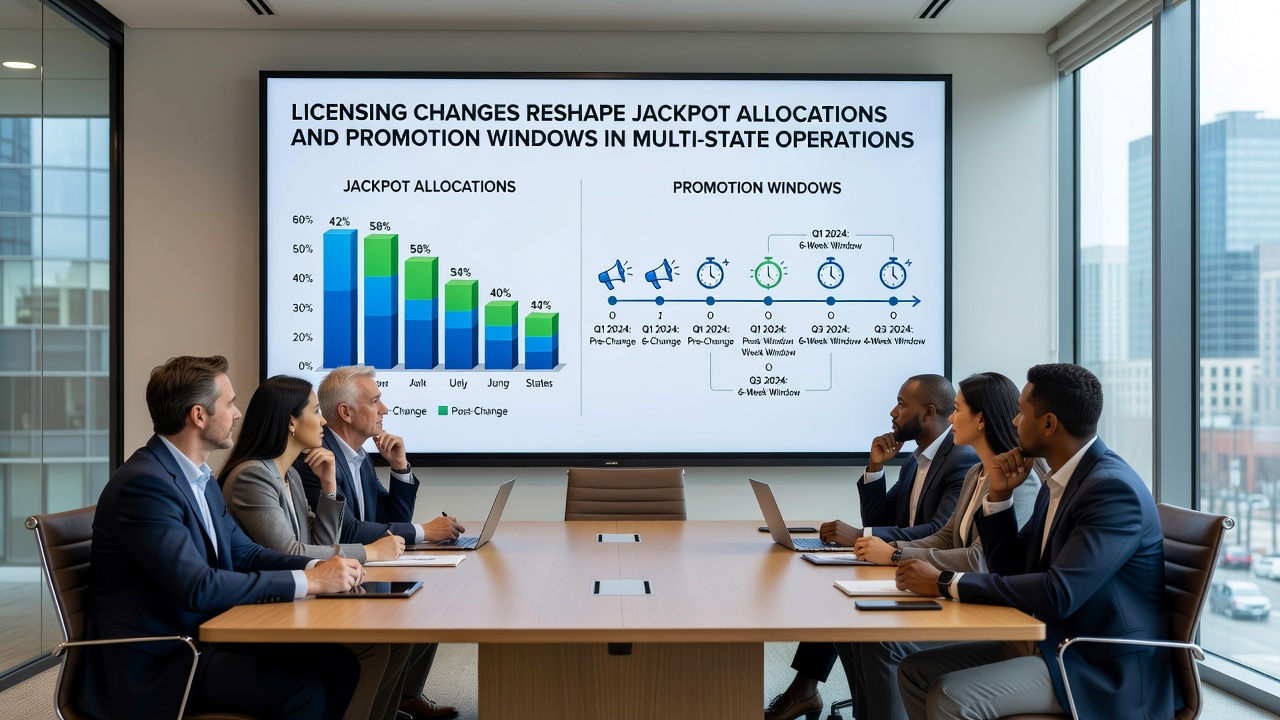
Operators report that the synchronization of these windows has forced adjustments to marketing calendars, particularly for mobile applications that serve players in overlapping regulatory zones. Figures released by the American Gaming Association indicate that 68 percent of multi-state slot networks have already begun aligning their bonus activation dates with the forthcoming July 2026 deadlines.
Compliance Burdens Shift Across Jurisdictions
Multi-state operators now face separate audit trails for each jurisdiction's portion of any shared jackpot, and this requirement extends to real-time reporting of promotion eligibility by player location. Australian state regulators have adopted similar segmented reporting standards, which several U.S. operators are studying as models for their own compliance systems.
Those who manage networks spanning both East Coast and Midwest markets note that the added documentation layers have increased operational costs by roughly 12 to 15 percent in the first quarter of testing, according to internal figures shared with industry researchers at the University of Nevada, Las Vegas.
Case Examples From Recent Transitions
A network operating in four states completed a pilot program last year that mirrored the coming allocation rules, and the results showed jackpot payout frequency dropped by one occurrence every six weeks while average prize sizes rose in the two largest markets. Observers at the Canadian Gaming Association have tracked comparable patterns in cross-province operations and found that staggered promotion windows reduced player confusion during transition periods.
Yet the same data also revealed that smaller states sometimes receive reduced jackpot exposure when the new formulas prioritize population-weighted contributions, prompting discussions about supplemental funding mechanisms that could be introduced before the July 2026 rollout.
Conclusion
The licensing revisions scheduled for July 2026 will require multi-state operators to maintain parallel accounting systems, coordinate promotion calendars more precisely, and recalibrate jackpot contributions according to each jurisdiction's licensed activity. Regulators continue to refine implementation guidance while operators adjust internal systems to meet the segmented allocation and timing standards now taking shape across multiple regions.