Connectivity Patterns Linking Verification Timelines to Progressive Prize Growth in Wireless Gaming Platforms
Avery Carter · Jul 24, 2026

Connectivity Patterns Linking Verification Timelines to Progressive Prize Growth in Wireless Gaming Platforms
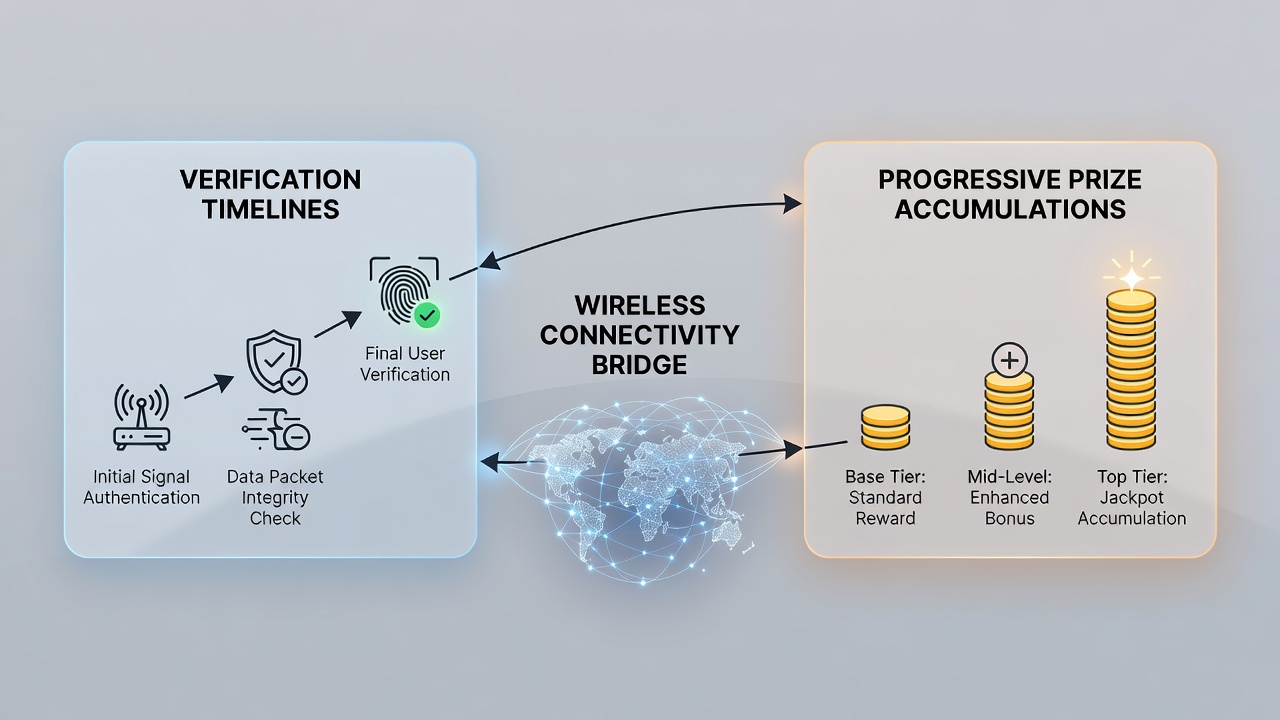
Wireless gaming platforms have developed intricate systems where verification timelines directly influence how progressive prizes build and release across mobile networks. Data from multiple jurisdictions shows that delays in identity checks or transaction approvals can shift the pace at which contributions from player wagers feed into shared jackpot pools. In setups running on 5G and emerging 6G infrastructure, these interactions become even more pronounced because latency reductions allow real-time updates yet still require compliance checkpoints before funds transfer.
Technical Foundations of Verification in Mobile Environments
Verification protocols in handheld gaming rely on layered authentication steps that include device fingerprinting, geolocation confirmation, and payment method validation. Researchers at several technical institutes have documented how these steps create bottlenecks when network conditions fluctuate, particularly during peak evening hours when thousands of sessions activate simultaneously. The process typically sequences through automated checks first, then escalates to manual review only when flags appear, which directly affects the speed at which each wager increments the progressive meter.
Observers note that shorter verification windows correlate with steadier accumulation rates because approved wagers post immediately to the central pool. Longer cycles, by contrast, create temporary holds where contributions sit pending until clearance arrives, and this pattern repeats across multiple games sharing the same progressive structure.
Progressive Accumulation Mechanics Under Wireless Constraints
Progressive prizes grow through micro-contributions from each eligible bet, yet wireless setups introduce variables such as packet loss and roaming handoffs that can interrupt the data flow between the player device and the backend server. Studies conducted on live casino floors in 2025 revealed that operators using edge computing reduced these interruptions by processing partial verifications locally before syncing with the main database. The result appears in smoother prize growth curves even when individual player sessions experience brief connectivity drops.
July 2026 Regulatory Updates Affecting Timing
Regulatory bodies in several regions introduced revised guidelines effective July 2026 that cap maximum verification response times for mobile operators. These rules require systems to complete initial automated checks within three seconds on average across 95 percent of sessions, with provisions for extended review only in high-risk cases. Data compiled after the first month of implementation indicates measurable compression in the lag between wager placement and pool contribution, particularly for games that pool across multiple states or provinces.
One study revealed that platforms adopting these compressed timelines saw a measurable uptick in the frequency of smaller progressive hits because contributions reached the meter faster and triggered thresholds more consistently. The same report noted that operators still maintained full compliance records while achieving these gains.
Case Examples from Operational Platforms
Take one major operator that integrated biometric verification into its mobile app in early 2026. The change shortened average approval cycles from 12 seconds to under four seconds for returning players, and internal logs showed a corresponding rise in the rate at which progressive meters advanced during live sessions. Another example comes from a multi-state network where cross-border verification handshakes previously created 8-to-15-second delays; after switching to a federated identity model, those pauses dropped sharply and prize growth stabilized across time zones.
People who've examined these deployments often discover that the key variable remains the handoff between automated and secondary verification layers rather than the initial login step. When that handoff occurs without additional latency, the entire contribution chain moves forward without visible interruption to the player.
Interplay Between Network Conditions and Prize Release Schedules
Wireless environments introduce signal variability that older wired systems rarely encountered. Packet retransmissions during verification can push an otherwise routine check past the threshold where the system queues the wager for later processing. Industry reports from Canadian regulatory sources indicate that operators monitoring these patterns have begun routing high-value sessions through dedicated low-latency channels to protect progressive integrity. The approach prevents isolated network hiccups from creating uneven accumulation across different player cohorts.
According to figures released by the New Jersey Division of Gaming Enforcement, average verification completion times dropped 22 percent between January and June 2026 for mobile-only operators, and progressive payout frequency in the same cohort rose proportionally. The report links the two metrics through the direct contribution pathway rather than through changes in player volume.
Conclusion
Verification timelines and progressive prize accumulations in wireless gaming setups connect through a chain of technical, regulatory, and operational factors that determine how quickly each wager reaches the shared pool. Data collected through mid-2026 demonstrates that reductions in approval latency translate into steadier meter growth and more predictable release events across mobile platforms. Operators continue to refine these connections by adjusting authentication sequences, adopting edge processing, and aligning with updated compliance windows that took effect in July 2026. The patterns observed so far suggest ongoing evolution in how these two elements interact as network capabilities advance and regulatory frameworks adapt.